Formaldehyde
Physical Properties
Also known as: Formalin (37% solution), Methanal, HCHO
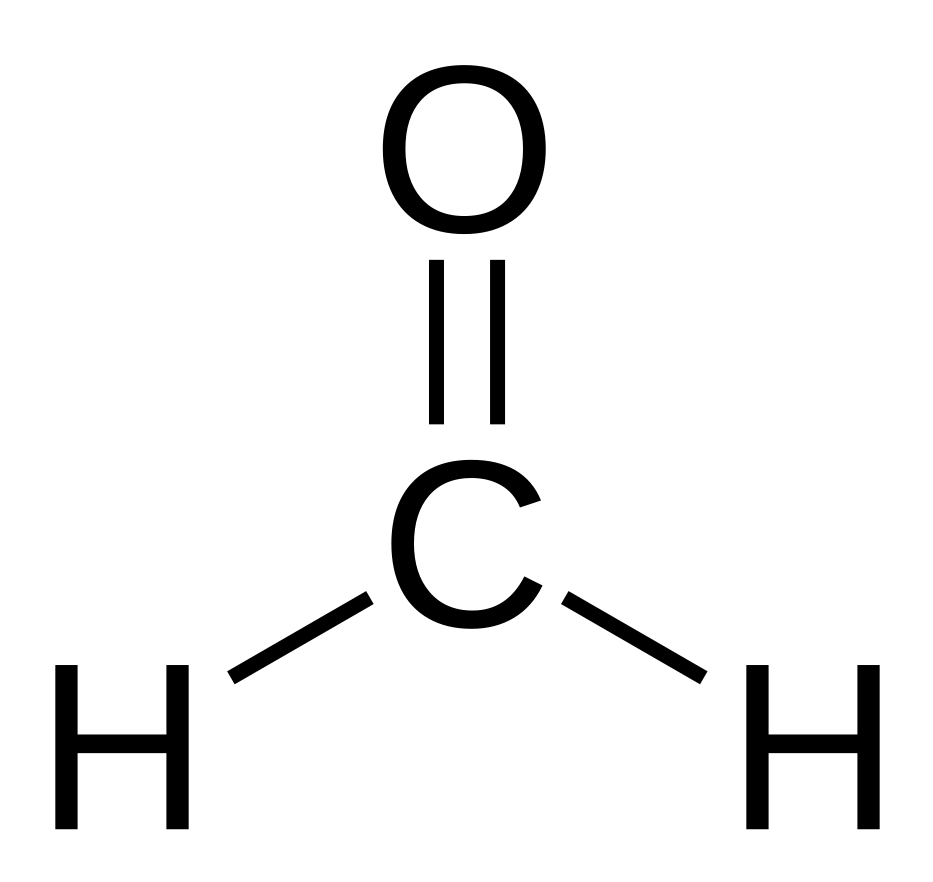
Formaldehyde (CH₂O; CAS 50-00-0) is the most powerful common gelatin hardener — an aldehyde that forms covalent methylene bridges between gelatin amino groups, producing essentially permanent, irreversible crosslinking.[1] Pure formaldehyde is a gas at room temperature; the form handled in darkrooms is formalin, a 37% aqueous solution stabilized with methanol. Formaldehyde's darkroom use has declined sharply since the 2006 IARC classification as a Group 1 carcinogen — the same classification as hexavalent chromium and asbestos.
Photographic uses
- Vapor-phase pre-hardening: Historical method using formaldehyde vapor in a sealed chamber to harden sensitized film or paper before processing.
- Liquid pre-hardener bath: A dilute formalin solution (typically 1–3% formalin, equivalent to 0.4–1.1% formaldehyde) pre-hardens emulsions for tropical processing or high-temperature commercial work.
- Stabilizer bath: Some colour-process stabilizers (C-41 final rinse) historically included formaldehyde for dye permanence. Modern replacements have eliminated this use in consumer chemistry.
- Post-fix hardening: Some print-finishing workflows historically dipped finished prints in dilute formalin for maximum durability.
Regulatory status
IARC Group 1 carcinogen (2006 classification, based on nasopharyngeal cancer and leukemia evidence in occupationally-exposed workers). OSHA regulates formaldehyde with a 0.75 ppm 8-hour TWA and 2 ppm short-term exposure limit.[2] Most contemporary darkroom workers avoid formaldehyde entirely — glyoxal provides comparable hardening with dramatically lower health risk.
Related compounds
Formalin is the 37% aqueous solution — the form actually stocked in darkrooms. Glyoxal is the safer modern substitute. Succinaldehyde is another aldehyde substitute used in some commercial formulations.
References
- BOOK Modern Photographic Processing, Volume 2 1st ed. John Wiley & Sons, 1979. ISBN 0-471-04635-X. ↩
- STANDARD OSHA Permissible Exposure Limits – Table Z-1 (29 CFR 1910.1000) U.S. Department of Labor. https://www.osha.gov/annotated-pels/table-z-1 ↩
- WEB Sigma-Aldrich Safety Data Sheets Sigma-Aldrich. https://www.sigmaaldrich.com/US/en/search/safety-data-sheets ↩