Iodine
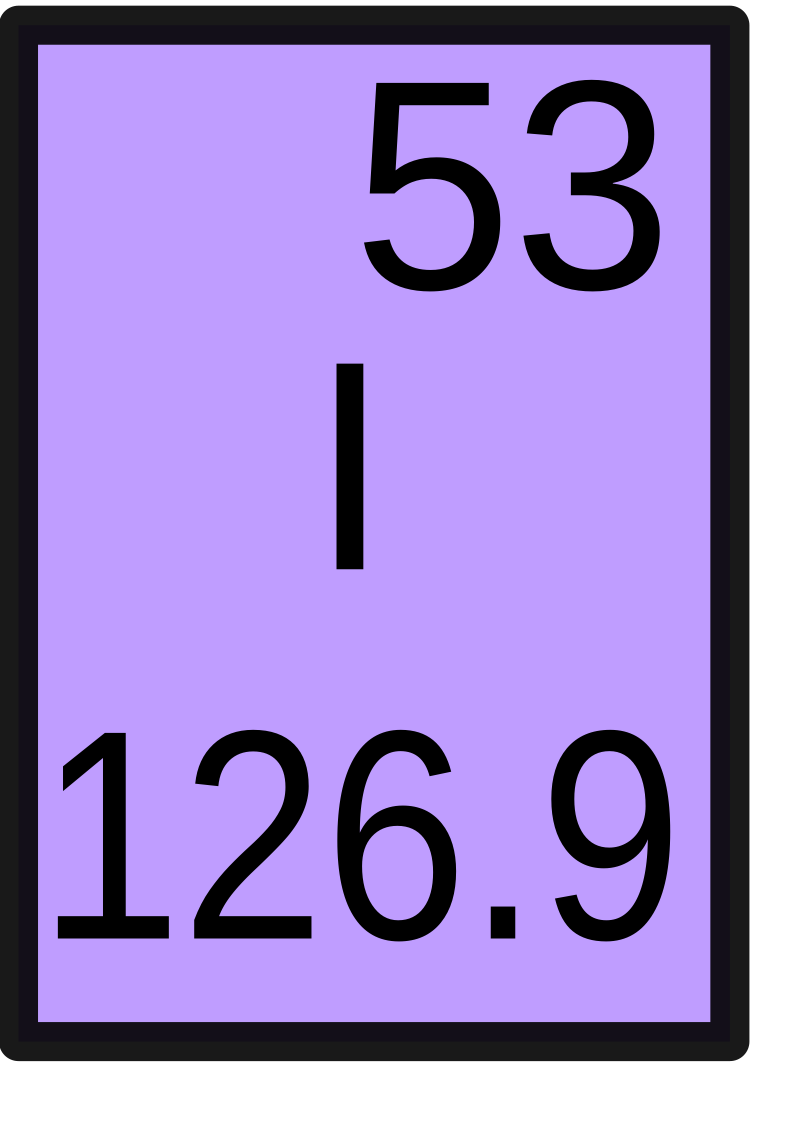
Physical Properties
Also known as: I2, Tincture of Iodine (in solution)
Iodine (I₂; CAS 7553-56-2) is used in photography as a test reagent for residual thiosulfate on archival prints (the "iodine test" — blue-black stain indicates thiosulfate contamination) and as a component of historical intensifier and collodion-sensitizing solutions.[1] The element itself is a dark purple-black crystalline solid that sublimes slowly at room temperature, producing characteristic violet vapor with a sharp pungent odour.
Photographic uses
- Residual-hypo test (iodine test): A 0.2% iodine in 0.4% potassium iodide solution, dripped on a washed print, turns brown-black if thiosulfate remains. The classical archival-wash confirmation method before modern "selenium tone as permanence indicator" techniques.
- Collodion iodide source (with potassium iodide): Historical wet-plate formulas use iodine + KI to form the silver iodide in the collodion-coating bath, as an alternative to cadmium or ammonium iodide.
- Intensifier (historical): Some 19th-century intensifier formulas use iodine to convert silver image to silver iodide, followed by redevelopment with a secondary metal (mercury, copper) for increased density.
- Bleach for reversal processing: Combined with potassium iodide in a complex bath that bleaches the first silver image before re-exposure and second development.
Practical notes
Supplied as dark violet-black crystalline shiny plates or "pellets" (iodine beads). Limited solubility in water (0.3 g/100 mL) but dissolves readily in alcohol, chloroform, or in aqueous potassium iodide (which forms the soluble triiodide KI₃).
Sublimation at room temperature releases violet iodine vapor that stains everything — cork bottle stoppers, wooden counter tops, and gasket seals turn iodine-brown within weeks of contact with even sealed iodine. Use glass-stoppered bottles with ground-glass joints; keep in a closed cabinet.
Iodine stains skin reddish-brown; the stains fade over days as the skin's iodide content re-equilibrates with body fluids.
Related compounds
Potassium iodide is the solubility partner for aqueous iodine work. Sodium thiosulfate reacts with iodine (the redox basis of iodometric titration) and can be used as a decontaminant for iodine spills.
References
- BOOK Modern Photographic Processing, Volume 2 1st ed. John Wiley & Sons, 1979. ISBN 0-471-04635-X. ↩
- WEB Sigma-Aldrich Safety Data Sheets Sigma-Aldrich. https://www.sigmaaldrich.com/US/en/search/safety-data-sheets ↩