Isopropyl Alcohol
Physical Properties
Also known as: IPA, Rubbing Alcohol, Isopropanol, 2-Propanol
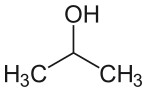
Isopropyl alcohol (2-propanol, C₃H₈O; CAS 67-63-0), commonly called IPA or rubbing alcohol (at the 70–90% pharmacy grade), is an organic solvent functionally similar to ethanol but slightly more aggressive as a cleaning agent and more water-displacing.[1] For most photographic uses the two are interchangeable; IPA is often preferred for cleaning and drying applications because it's cheaper than denatured alcohol and has a stronger "wetting reversal" effect on wet surfaces.
Photographic uses
- Film drying accelerant: A final rinse with 10–20% IPA solution (from 70% rubbing alcohol diluted 1:3) displaces water from the film surface, dramatically speeding drying and reducing mineral spots. The single most common darkroom use of IPA.
- Equipment cleaning: Lenses, negative carriers, enlarger glass, trays — IPA cleans organic residues without leaving residue. Superior to ethanol for removing silver salts from glass.
- Chemical dissolution: Some organic developing agents and sensitizers that dissolve poorly in water alone are first dissolved in IPA, then added to the water-based formula.
- Photo-Flo substitute: In a pinch, a drop of IPA in the final rinse can substitute for a proprietary wetting agent — not as effective as true surfactants but available in any household.
Practical notes
Supplied as 70% "rubbing alcohol" (pharmacy grade, the cheapest and most common form), 91% IPA (big-box hardware stores, sometimes called "isopropyl rubbing alcohol"), or 99%+ anhydrous grade (chemistry suppliers, the photographic form for critical applications).
IPA vs ethanol for photographic work: IPA dries slightly faster than ethanol, leaves fewer residues on glass surfaces (no sugar-like haze that some denatured ethanols leave), and costs less per gallon. Ethanol is preferred for collodion work (IPA behaves differently with nitrocellulose) and for applications where methanol denaturant in typical ethanol would contaminate the process.
Related compounds
Ethanol is the close functional alternative. Methanol is a cheaper alcohol used in some industrial workflows but has far more severe toxicity (systemic poisoning, blindness from chronic exposure) and has no photographic advantage.
References
- BOOK Modern Photographic Processing, Volume 2 1st ed. John Wiley & Sons, 1979. ISBN 0-471-04635-X. ↩
- WEB Sigma-Aldrich Safety Data Sheets Sigma-Aldrich. https://www.sigmaaldrich.com/US/en/search/safety-data-sheets ↩