Potassium Citrate
Physical Properties
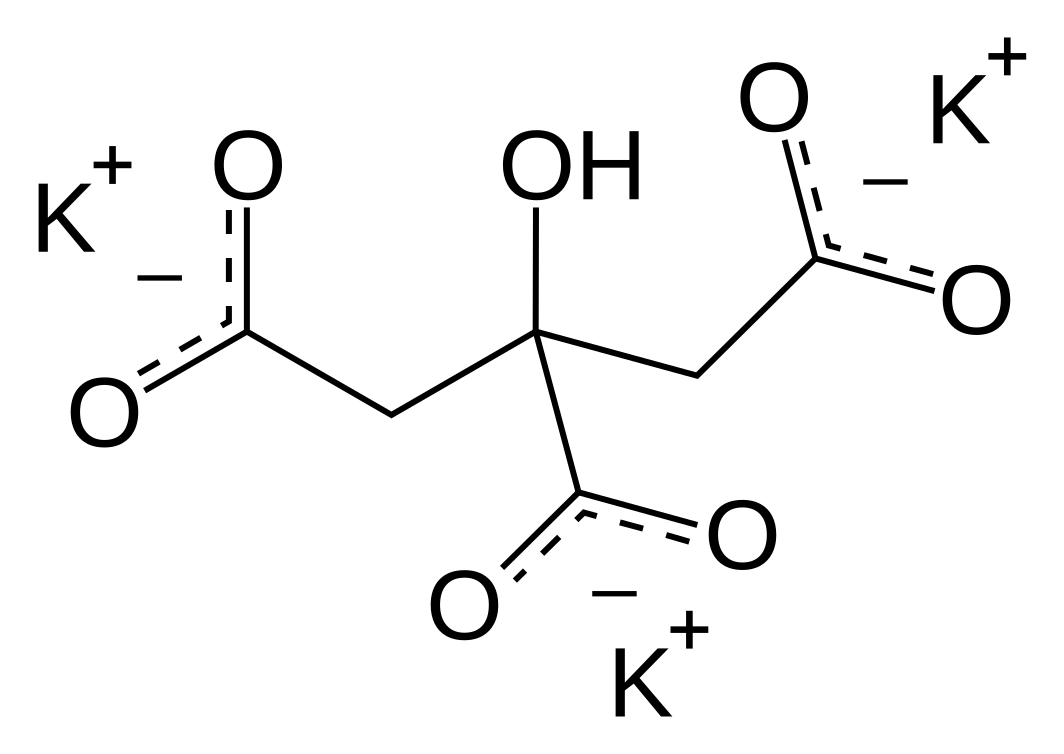
Also known as: Tripotassium Citrate, K3C6H5O7
Potassium citrate (tripotassium citrate; K₃C₆H₅O₇; CAS 866-84-2) is a mild alkaline buffering salt used in specialty toning formulas and a handful of alternative-process baths. Forms a citrate buffer system with citric acid that resists pH shift better than acetate buffers at the slightly-alkaline working pH typical of toning baths.[1]
Photographic uses
- Blue and brown toning formulas: Some iron-based blue toners and selenium-assisted brown toners use potassium citrate to maintain pH and keep the toner bath clear.
- Van Dyke brown process: Potassium citrate is present in some clearing-bath variants to sequester iron and maintain a stable pH during the developing phase.
- Kallitype and argyrotype variants: A buffering component in several historical-process formulas where a near-neutral-to-slightly-alkaline pH is required.
Practical notes
Supplied as white crystalline powder or granules. Readily soluble in water. Solutions are stable for weeks; refrigeration extends shelf life if the formula includes organic matter (like tannins in some toner formulas) that can support microbial growth.
Related compounds
Sodium citrate is the sodium analogue and is interchangeable in most formulas at the same molar concentration. Citric acid is the free acid form.
References
- BOOK The Darkroom Cookbook 4th ed. Focal Press, 2016. ISBN 9781138959170. ↩
- WEB Sigma-Aldrich Safety Data Sheets Sigma-Aldrich. https://www.sigmaaldrich.com/US/en/search/safety-data-sheets ↩