A wet-plate glass negative is a wet-collodion image made on a sheet of clear (un-backed) glass and used as a contact-printing source for downstream alt-process prints — albumen, salt, printing-out paper (POP), or platinum/palladium — rather than viewed directly as a positive image. The output of a wet-plate-glass-negative session is not the finished photograph; it is a working master from which finished prints are made afterward, in a separate alt-process printing session that is its own discipline. This negative-for-printing intent drives every workflow tuning decision and distinguishes the format sharply from the two direct-positive spokes (tintype and ambrotype) of the wet-plate-collodion family.
This page is the third spoke of the wet-plate-collodion family, alongside tintype (japanned-iron substrate, direct positive) and ambrotype (clear glass with separate black backing, direct positive). The chemistry, workflow, spectral sensitivity, and time-pressure framing common to all wet-plate output formats live on the Wet-Plate Collodion hub. This page focuses on what is unique to the wet-plate glass negative: the substrate is unbacked clear glass; the OUTPUT is a NEGATIVE intended to be contact-printed downstream; and every workflow distinctive (density target, contrast target, fixing thoroughness, varnishing, archival storage) flows from that negative-for-printing intent.
What sets it apart from the other spokes
The single most important fact about the wet-plate glass negative is that the OUTPUT is a NEGATIVE, not a direct positive. Both sister spokes produce direct positives where the silver image is viewed by reflected light against a dark substrate or backing. The glass negative produces a transmissive image — light passes straight through the clear glass and the silver image is read as a negative, useful as a printing master rather than as the final image.
This negative-vs-positive intention is not a small distinction; it drives every downstream workflow choice and every long-term-storage decision.

A practitioner doing tintype or ambrotype work has the finished image at the end of a single wet-plate session — pour, sensitize, expose, develop, fix, varnish, done. A practitioner doing wet-plate glass negative work has only the master at that point; to get a viewable image, they need to additionally have an albumen-printing or salt-printing or POP or platinum/palladium printing operation set up and working. That is a separate alt-process discipline with its own chemistry, supplies, paper sources, exposure equipment, and learning curve.
The chemistry is identical to ambrotype's; the substrate is the same kind of clear glass as ambrotype's. What differs is the absence of the black backing (because the image is meant to be transmitted, not reflected) and the intent (the master rather than the artifact). Every workflow distinctive on this page traces back to those two facts.
The substrate
The substrate is clear soda-lime float glass — the same glass used for ambrotype, but without the black backing that converts an ambrotype into a positive. Standard practice:
- Thickness 2.0–3.0 mm. Thicker than ambrotype glass is acceptable and sometimes preferred — the negative is handled more (loaded into a printing frame against paper, transported in slip-sleeves, archived in plate boxes) and the extra mass survives the handling. 2.5 mm is a good middle.
- Larger sizes are more common than for the direct-positive spokes. Modern wet-plate negative practice runs 4×5, 5×7, 8×10, 11×14, 16×20, and (in the most ambitious modern practice) 20×24 — because contact-printing means print size equals negative size, and practitioners working toward gallery-scale alt-process prints need the negative size to match. 19th-century practice covered the same range, plus the smaller carte-de-visite (CDV) and cabinet-card sizes for production portrait studios, plus the historic plate-size ladder up to mammoth plate (18×22 in or larger).
- Subbing with a thin gelatin layer matters more for negatives than for direct positives because the negative is handled more (loaded into a printing frame multiple times) and the collodion film must stay bonded to the glass for years of repeated printing cycles. Standard practice is the same 0.3% gelatin solution in distilled water with 0.3% chrome alum used for ambrotype, applied warm by dip-coating or pouring; the subbed glass is dried for 24 hours before use.

Some practitioners skip the sub and rely on collodion's natural adhesion to clean glass; the sub adds reliability but is not strictly required, and is more important for printing negatives than for ambrotypes for the handling-frequency reasons above.
- Edge prep — sand all four edges with 220-grit then 400-grit sandpaper, optionally seal with clear nail polish. Glass-negative edges that chip into the wash water or scrape against the printing frame's hinge can ruin a print years after the negative was made. Edge discipline is a working requirement, not a nicety.
The "for printing" workflow distinctives
These are the workflow choices that differ from the direct-positive spokes. The chemistry is identical to the Wet-Plate Collodion hub, but every step is tuned for the negative-for-printing intent.
Density target
Printing negatives need substantially denser silver deposits than direct-positive plates. Direct-positive plates (tintype/ambrotype) want the silver image to read as a luminous mid-tone against a dark backing — a thin, delicate silver layer is ideal. Printing negatives want substantial density (D-max often 1.5–2.0+ for albumen, 1.2–1.5 for POP, somewhat lower for platinum/palladium) — a thick, dense silver layer is what carries the highlight separation through the contact-printing step.
The D-max target depends on the downstream print process:
- Albumen print — D-max 1.5–2.0+ (the highest of the alt-process prints; albumen is a low-contrast medium that needs a high-contrast negative).
- Salt print — D-max 1.5–2.0 (similar to albumen; salt prints are even lower-contrast and need very dense negatives).
- POP (Printing-Out Paper) — D-max 1.2–1.5 (medium; POP has more contrast latitude than albumen).
- Platinum/palladium — D-max 1.0–1.5 (lower; platinum tolerates a wider density range than the silver-based print processes).
These are working approximations from practitioner literature; specific densities depend on the exact paper, sensitizer batch, exposure time, and viewing-light convention used downstream.
Contrast target
The contrast curve of the negative is tuned to invert the contrast curve of the downstream print process. Albumen prints have a short tonal scale (highlights blow out and shadows block up easily) so the negative needs to be high-contrast to give the print process room to work. Platinum/palladium has a long tonal scale and tolerates lower-contrast negatives. POP sits in between.
In practice, the practitioner builds an exposure-and-development workflow tuned to one specific print process, then sticks with it. Switching from albumen-targeted negatives to platinum-targeted negatives mid-project means re-tuning the entire wet-plate workflow — exposure, development time, possibly developer dilution. Most practitioners doing serious work pick a primary print process and align everything around it.
Exposure
Longer than for direct positives, intentionally over-exposed by 1–2 stops to build density. A typical 1/2-second outdoor portrait exposure for a tintype becomes a 2–4 second exposure for a printing negative under the same conditions. The practitioner is deliberately exposing for the shadows (to ensure shadow detail in the negative, which becomes highlight detail in the print) and accepting that the highlights will block up in the negative — that's exactly what's wanted, since the dense highlight regions of the negative print as the lightest tones in the contact print.
Development
Extended — typically 30–45 seconds with iron-sulfate developer, vs the 10–15 second standard for direct positives. The developer is sometimes diluted further (less ferrous sulfate per liter) to slow the reaction and give finer control over highlight density. Practitioners watch the image build under safelight and pull development when the highlights have reached the target density — a different judgment call than for direct positives, where development is pulled when the highlights look right by direct viewing rather than when they have reached a measurable density.
Fixing — exhaustive, archival-grade
The single most important workflow decision for printing negatives. Direct-positive plates are often fixed in 30–60 seconds (in cyanide) or 2–5 minutes (in thiosulfate); a printing negative needs 5+ minutes in fresh sodium thiosulfate, followed by hypo-clearing washes (a brief soak in a sodium-sulfite or proprietary hypo-clear solution, then a thorough running-water rinse). Residual thiosulfate in the gelatin sub-layer or the collodion will, over decades, react with the silver image and produce yellowing or staining — and unlike a direct-positive plate (where any degradation just affects that one viewing object), a printing negative is the master from which all future prints come, so any chemical degradation propagates into every print made later from that negative.
Most modern practitioners use sodium thiosulfate rather than potassium cyanide for printing negatives specifically because the longer fix time is a feature: it ensures complete clearing of unexposed silver halide, and the slower clearing rate lets the practitioner watch the plate clear under safelight and pull it at the right moment. Cyanide fixes faster but the speed advantage matters less for negatives than for the direct-positive spokes where session throughput is part of the practical economics.
Drying and archival storage
Negatives are stored as artifacts. Each plate goes into a slip-sleeve (acid-free paper or polyester), then into a labeled plate box, archived in a stable temperature/humidity environment — ideally 18–22 °C and 30–50% relative humidity. Direct-positive plates are typically displayed (in cases or frames) and don't see this kind of archival storage; printing negatives are working masters that need to last decades of repeated contact-printing cycles. Some practitioners keep digital scans of every negative as backup masters, with the original glass plate held in archival storage as the authoritative reference.
Varnishing — heavier coat
A printing negative gets a heavier gum-sandarac varnish coat than a direct-positive plate, both because the negative is handled more (loaded into and out of a printing frame for every print made) and because any varnish damage shows up in every subsequent print. Some practitioners do a double coat — varnish, warm gently, varnish again — for negatives intended for many printing cycles. The varnish layer also provides a small additional barrier against atmospheric tarnish and oxidation, both of which are slower-acting than chemical degradation but still real over multi-decade storage.
Historical context — the 19th-century mainstream
The wet-plate glass negative + albumen print combination was the dominant 19th-century professional photographic workflow. From the late 1850s through the 1880s, this two-step chain — wet-plate negative made in the studio, albumen print contact-printed in the sun afterward — was the bedrock of commercial portrait photography, scenic photography, and documentary photography.
The carte-de-visite (CDV) market, which exploded in the 1860s, ran on this workflow. A studio sitter would pose for a single wet-plate negative (typically a 1/4-plate or 1/2-plate exposed in a multi-lens "carte" camera that produced 4–12 small images per plate). The negative was contact-printed onto albumen-coated paper in a sun-printing frame, the prints were trimmed and mounted on cardstock with the studio's name printed on the back, and the customer received a dozen identical small portraits at marginal cost.
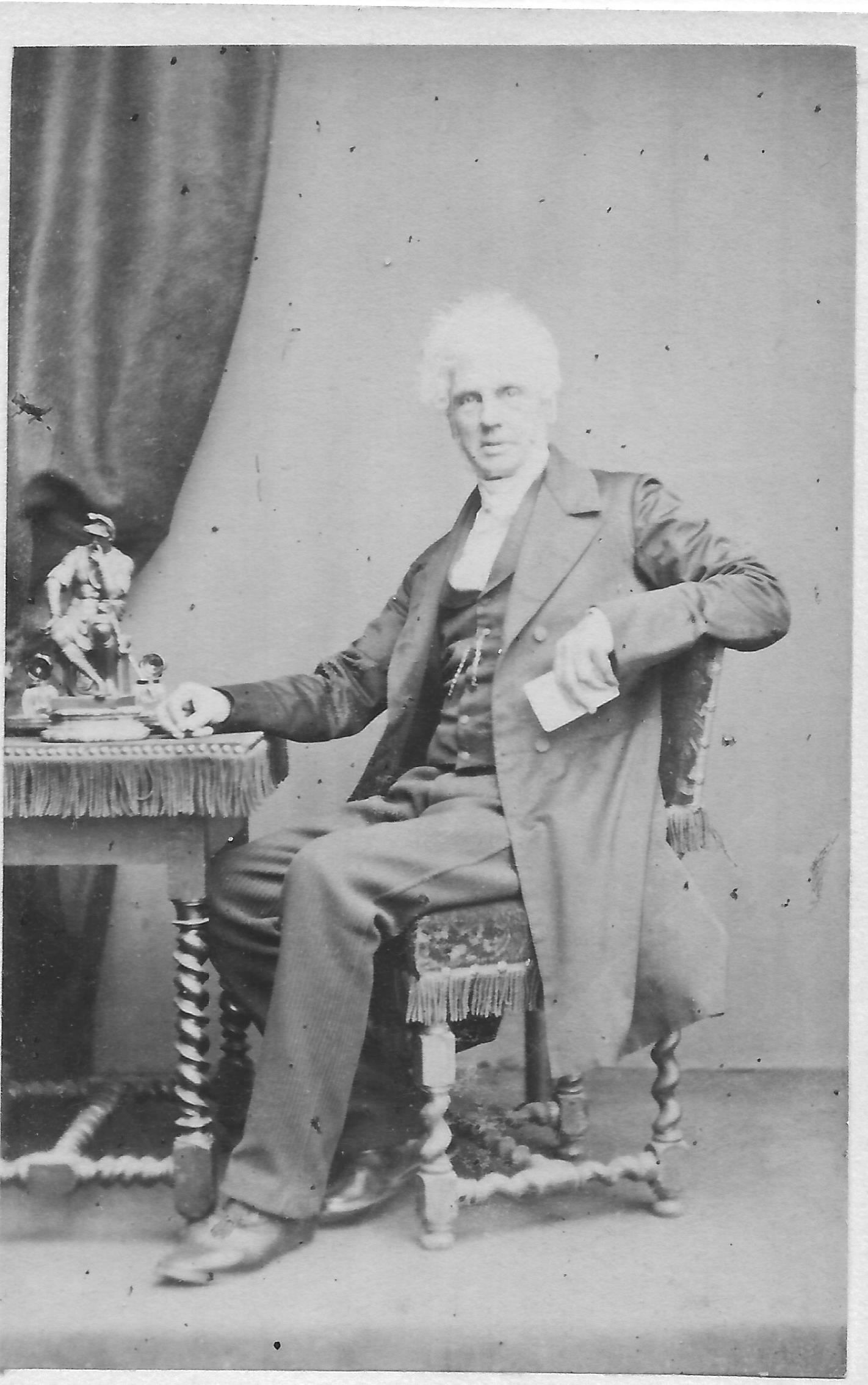
This was the photographic equivalent of mass production — the first time a single photographic sitting could yield many identical prints at low per-unit cost. The cabinet card (a larger format on stiffer mount cardstock, popular from the 1870s) used the same workflow at slightly larger scale.
Mathew Brady's Civil War operation produced thousands of wet-plate glass negatives. The Library of Congress's Civil War Glass Negatives collection acquired in 1943 includes 7,500 original glass plate negatives from Brady and his field photographers (Alexander Gardner, Timothy O'Sullivan, and others); the Brady-Handy Collection acquired in 1954 adds approximately 4,000 more original wet-collodion plates. These two collections plus other museum and private holdings represent the surviving documentary record of the war, and almost all of them are wet-plate glass negatives — the format was the only practical way to do field documentary photography at the time. Brady's mobile darkroom wagons (the "what-is-it" wagons that field photographers carried into battle zones) were essentially mobile wet-plate glass-negative production units, traveling with the army and producing negatives that were sent back to Brady's studios to be contact-printed for sale to the public.

Postwar studio portrait practice continued the workflow through the 1880s. Carte-de-visite albums in middle-class homes filled up over a decade or two with portraits of family members, soldiers, public figures (CDVs of Lincoln, Grant, and other notables were sold by the millions), and the occasional novelty print. Family albums from this era are essentially albumen-print catalogs of the wet-plate-glass-negative workflow's commercial output.
The format was displaced gradually after 1880, in two stages:
- Silver-gelatin dry plates (from roughly 1879–1885 onwards) brought factory-made glass negatives that didn't require on-the-spot wet processing. A coated, dried gelatin plate could sit in a holder for weeks, be exposed at the photographer's convenience, and developed any time afterward. Dry plates were also several stops faster than wet plates (ISO 25–50 vs wet collodion's ISO 1) and worked under broader lighting conditions. By 1885 dry plates had displaced wet plate for almost all serious studio work; wet plate continued only in carnival tintype practice and a few scattered specialty uses. See silver-gelatin dry plate coating for the dry-plate workflow that replaced wet plate at the professional level.
- Eastman's roll-film camera (Kodak No. 1, 1888) brought the pre-loaded mass-market consumer camera that ended the per-plate professional model entirely for amateur photography. The professional studio market continued using sheet film (and dry plates) but the volume shifted from per-plate professional output to roll-film amateur snapshots. Wet plate's last commercial niche, the carnival tintype, persisted into the 1920s but was effectively gone from professional practice by 1900.
The 19th-century surviving corpus of wet-plate glass negatives is large but unevenly distributed. The Library of Congress and the National Archives in the US, the V&A and the Royal Collection in the UK, the Bibliothèque nationale de France, the George Eastman Museum in Rochester NY, and dozens of regional historical societies hold substantial collections. Many private holdings exist as well, including individual studio archives that survived as estates after 19th-century photography businesses closed.
Why the format is rare in modern practice
Wet-plate glass negative work is significantly less common than tintype or ambrotype in the modern wet-plate revival. Three reasons:
- Requires a downstream alt-process printing setup. A practitioner doing tintype or ambrotype work has the finished image at the end of a single wet-plate session. A practitioner doing wet-plate glass negative work has only the master at that point — to get a viewable image, they need to additionally have an albumen-printing or salt-printing or POP or platinum/palladium printing operation set up and working. That doubles the alt-process commitment, doubles the chemistry inventory, doubles the supply-chain dependence, and doubles the learning curve. For practitioners who are already managing the friction of wet-plate workflow, the additional friction of an alt-process print discipline is significant.
- The negative isn't the final image. For practitioners who want a finished art object out of the wet-plate process, the direct-positive spokes deliver immediately. The negative is an intermediate artifact, valuable only as a master for downstream prints. Many practitioners who would otherwise be drawn to wet-plate are drawn instead to tintype or ambrotype because the output of the wet-plate session IS the output of the project.
- Dry-plate alternatives are easier with equivalent or better results. A practitioner who wants a glass negative for alt-process printing has straightforward modern alternatives: hand-coat a silver-gelatin dry plate (faster ISO, dry working, much longer shelf life) or use a commercial dry plate from J Lane or Zebra, or shoot conventional sheet film and contact-print. Each of these gives a printable negative without the wet-plate workflow friction. The wet-plate glass negative's only advantage over these alternatives is period-correct chemistry — which matters to a minority of practitioners whose work is deliberately referencing the 19th-century chain end-to-end, but not to most.
The contemporary practitioners who do work the full wet-plate-to-print chain are mostly alt-process printers who want full period-correct chemistry from capture through final print. This is a small subset of the wet-plate community — a few hundred working practitioners worldwide, concentrated in a handful of teaching institutions where the full curriculum is taught.
Linkage to the alt-process printing chain
A wet-plate glass negative is not a finished image; it is a starting point for one of four downstream contact-print processes. Each is its own technique with its own learning curve, supplies, and aesthetic:
- Albumen prints — egg-white-based salt prints with an albumen sizing layer that gives the characteristic glossy yellowish-warm surface of 19th-century portrait photography. The dominant 19th-century mainstream print. Sensitized with silver nitrate, exposed in a contact-printing frame in sunlight or under UV until the image prints out, then washed, gold-toned, fixed, and dried. France Scully Osterman of the Scully & Osterman Studio teaches the canonical Online Albumen-Making Class covering paper-coating, sensitizing, contact-printing, and gold-toning in detail.
- Salt prints — the earliest practical paper-print process, dating to William Henry Fox Talbot's photogenic-drawing experiments in the mid-1830s and refined through the 1840s alongside the calotype paper negative. Plain paper salted with sodium chloride solution, sensitized with silver nitrate, exposed in a contact frame, then washed, optionally gold-toned, and fixed. The simplest of the alt-process prints chemically; the lowest-contrast and softest in the final image. Talbot considered salt-print appearance more attractive than calotype-paper appearance for printing from negatives.
- POP (Printing-Out Paper) — silver-chloride emulsion-coated paper that prints by direct UV exposure without development. Commercial POP papers were the early-20th-century mainstream consumer-print process; modern alt-process POP papers are made by a small number of specialty manufacturers. Quinn Jacobson's Studio Q Photography covers POP from wet-plate negatives in his teaching and writing.
- Platinum/palladium — the archival-permanence print process. Iron salts (ferric oxalate) sensitize the paper; UV exposure reduces the iron salt; contact with platinum or palladium salts in the development step deposits the noble metal as the final image. The most expensive of the alt-process print materials (platinum/palladium chemistry runs $100+ per print at gallery scale) and the most archival (well-made platinum prints are projected to last 1,000+ years without fading). Bostick & Sullivan and other alt-process suppliers stock the chemistry; books by Christopher James, Richard Sullivan, and others cover the workflow.
Each of these four print processes has its own technique chain that's beyond the scope of this page. They are natural future content candidates and would convert this glass-negative spoke from a dead-end reference into a hub for an alt-process-printing technique cluster.
Workshops and practitioners (glass-negative-specific notes)
The practitioners and institutions teaching wet-plate glass negative work are a subset of the broader wet-plate community — those with established alt-process print teaching alongside their wet-plate teaching:
- Scully & Osterman Studio (Mark Osterman + France Scully Osterman, Rochester NY) — established 1991. Their teaching covers the full wet-plate-to-print chain at depth that nobody else in the modern community matches. France Scully Osterman has a dedicated Online Albumen-Making Class covering every step from selecting paper and negatives, through making the albumen and coating the paper, through exposing and processing the final print. Her in-person Rochester workshops include period-correct glass-negative-to-albumen-print teaching in their advanced curriculum. Mark Osterman's George Eastman Museum scholarship gives the Osterman teaching the strongest historical-scholarly grounding in the modern community on the 19th-century professional workflow. Both are recognized authorities on early photographic processes including wet- and dry-plate collodion, collodion-chloride POP, photogenic drawing, albumen, and salt print methods.
- Lisa Elmaleh + Penumbra Foundation Wet Plate in the Field — the field workshop teaches glass negatives alongside tintype and ambrotype, with substrate-handling instruction adapted for the harder logistics of glass plates in the field (transport in padded cassettes, exposure-protected plate boxes, careful break-prevention discipline at every step). The Penumbra Foundation also runs printing classes (albumen, salt, platinum/palladium) that connect to the glass-negative work and let practitioners build the full alt-process chain in one institution.
- Quinn Jacobson / Studio Q Photography — Chemical Pictures: The Complete Guide to Wet Plate Collodion Photography (2020 ed., ISBN 978-1-7018-5410-9) covers glass negatives alongside tintypes and ambrotypes, with substantial chapter-level content on POP printing from wet-plate negatives. Jacobson's video workshop hosted on Vimeo includes the glass-negative-and-POP workflow. His Las Cruces NM studio practice is an example of a sustainable contemporary alt-process operation that includes the full capture-through-print chain.
- John Coffer's Camp Tintype — though named for the tintype, Coffer covers glass negatives in Doer's Guide to Wet-Plate Photography (2025 ed.) and in advanced workshop sessions. Students who want the full period-correct chain can build on Coffer's wet-plate foundation and add albumen-print teaching from another source (Scully & Osterman, Penumbra Foundation, or one of the regional alt-process facilities that teach albumen alongside other contact-print processes).
The full wet-plate-to-albumen-print chain is taught by a small subset of the community — roughly a half-dozen institutions worldwide with substantive published curriculum on both halves. Practitioners doing this work at production scale (more than occasional plates) are correspondingly few.
Tools and supplies
A wet-plate glass-negative practitioner's specific supply needs (above and beyond the general wet-plate tooling on the hub page):
- Float glass — 2.0 to 3.0 mm soda-lime float, cut to size by any glazier. Very inexpensive (~$0.50 per 4×5 cut); larger sizes cost proportionally to area. Period plate sizes (1/4, 1/2, whole, 11×14, 16×20, mammoth) require custom cuts.
- Subbing materials — photographic-grade gelatin (Photographers' Formulary, Photo Warehouse), chrome alum (specialty alt-process suppliers), distilled water. ~$30 once gives years of subbing supply. Subbing is more important for negatives than for ambrotypes for the handling-frequency reasons above.
- Plate holders — modern view-camera sheet-film holders accept glass plates directly in matching sizes (4×5, 5×7, 8×10). For larger plate sizes (11×14, 16×20, 20×24), specialty plate holders or modified historic holders are required.
- Slip-sleeves and archival plate boxes — acid-free paper or polyester slip-sleeves (Light Impressions, Talas, University Products), labeled archival plate boxes (same suppliers). Plan on a slip-sleeve and a box slot per negative produced.
- Contact-printing frame — a hinged wooden frame with a glass front, a felt-lined back, and clamps to hold a paper-and-negative sandwich tightly together for sun-exposure or UV-exposure printing. Sized to the negative's plate size; one frame per common size (4×5, 5×7, 8×10) covers most workflows. Bostick & Sullivan and other alt-process suppliers stock these.
- Alt-process print supplies — depends on the print process chosen (albumen, salt, POP, or platinum/palladium). Each has its own chemistry inventory, paper sources, and sensitizer supplies. Bostick & Sullivan, Photographers' Formulary, and a handful of UK and European specialty suppliers cover the alt-process print catalog.
- UV exposure unit (optional) — for indoor printing in any weather, a UV exposure box (commercial unit or DIY plywood-and-fluorescent-tubes build) lets the practitioner print on demand rather than waiting for sun. Most serious modern alt-process printers have one. Cost runs from $200 (DIY) to $2000+ (commercial NuArc-style unit).
Cross-spoke comparison: glass negative vs. tintype vs. ambrotype
The three wet-plate spokes share identical chemistry; they differ in substrate, intent, and downstream workflow:
- Substrate: clear glass (glass negative) vs. japanned iron (tintype) vs. clear glass + separate black backing (ambrotype).
- Output: negative for downstream contact printing (glass negative) vs. direct positive viewed by reflected light (tintype, ambrotype).
- Density target: high D-max for printing (glass negative) vs. moderate density for pleasant direct viewing (tintype, ambrotype).
- Fixing: archival-grade exhaustive 5+ minutes thiosulfate plus hypo-clear washes (glass negative) vs. quick functional 30 sec to 5 min (tintype, ambrotype).
- Storage: archival plate boxes in slip-sleeves, climate-controlled environment (glass negative) vs. presented in cases or frames for direct viewing (tintype, ambrotype).
- Varnishing: heavier coat or double-coat for repeated handling (glass negative) vs. standard single coat (tintype, ambrotype).
- Modern commercial niche: smallest of the three (glass negative — bridges to alt-process printing for a small specialist subset) vs. largest (tintype — gallery work + commission portraiture) vs. medium (ambrotype — gallery work, smaller commission market).
- Historical period: dominated 1858–1885 as the mainstream professional negative-and-print workflow (glass negative) vs. 1860–1900 carnival and military portrait (tintype) vs. brief 1855–1865 parlor-portrait peak (ambrotype).
- Downstream commitment: requires a separate alt-process printing discipline (glass negative) vs. self-contained single-session output (tintype, ambrotype).
A practitioner who wants finished, viewable wet-plate images chooses tintype or ambrotype. A practitioner committed to a full period-correct alt-process print workflow — chemistry from collodion through final albumen or platinum print — chooses glass negative. The three are mutually compatible (the same wet-plate session can produce multiple plate types) but each has a distinct downstream commitment.
For practitioners who want printable negatives without the wet-plate workflow friction, the modern alternative is silver-gelatin dry plate coating — hand-coated emulsion on glass that produces a printable negative with all the modern advantages (faster ISO, dry working, longer shelf life). Most modern alt-process printers who don't have a specific period-correct-chemistry commitment work from dry-plate or sheet-film negatives rather than from wet-plate glass negatives, for the reasons above.
For the chemistry and workflow
The wet-plate glass negative uses identical wet-collodion chemistry and workflow to tintype and ambrotype. Collodion + halide salts → silver-nitrate sensitizing bath → expose-while-wet → develop-while-wet with iron-sulfate developer → fix (sodium thiosulfate or potassium cyanide; thiosulfate strongly preferred for negatives) → wash → varnish with gum sandarac. Total wet-chemistry time roughly 8–10 minutes from pour to fix, with the longer development and fixing for negatives extending the back end somewhat. All of the time-pressure framing, the spectral-sensitivity-and-subject-lighting consequences, the field-darkbox practicalities, and the chemistry-safety considerations apply to the glass negative identically to the other wet-plate output formats.
The substrate is the same kind of clear soda-lime float glass used for ambrotype, just without the black backing — an ambrotype WITHOUT its backing reads as the same kind of negative that this page describes. What differs from ambrotype is the absence of the backing (because the image is meant to be transmitted to paper, not reflected to a viewer) and the workflow tuning (density, contrast, fixing thoroughness, archival storage) that flows from the negative-for-printing intent.
For the full chemistry and workflow treatment, see the Wet-Plate Collodion hub. This glass-negative page deliberately does not duplicate that material — the hub is the canonical reference for everything that wet-plate output formats share, and this page focuses only on what is unique to the glass-negative-for-printing variant.
External Resources
- Scully & Osterman Studio (collodion.org/scully-osterman) — Rochester NY, full wet-plate-to-print chain teaching at the depth nobody else in the community matches.
- Scully & Osterman Online Albumen-Making Class (collodion.org/online-albumen-making-class-1) — France Scully Osterman's dedicated teaching for the dominant downstream print process for wet-plate negatives.
- Penumbra Foundation Wet Plate in the Field (penumbrafoundation.org/wet-plate-in-the-field) — multi-day field workshop covering glass negatives alongside tintype and ambrotype, with associated alt-process printing classes available.
- Penumbra Foundation / CAP (penumbrafoundation.org) — NYC non-profit alt-process facility, ~100 workshops/year covering both wet-plate capture and alt-process print processes.
- Studio Q Photography (studioq.com) — Quinn Jacobson's gallery, blog, book sales, and Vimeo workshop covering the full wet-plate-to-POP chain.
- John Coffer's Camp Tintype (johncoffer.com) — Dundee NY workshop covering glass negatives alongside tintype.
- Coffer, Doer's Guide to Wet-Plate Photography (self-published, currently 2025 ed.) — most extensive practitioner manual + DVD set; glass-negative-specific content covering substrate prep, density tuning, and archival fixing.
- Jacobson, Chemical Pictures: The Complete Guide to Wet Plate Collodion Photography (2020 ed., ISBN 978-1-7018-5410-9) — comprehensive single-volume reference; chapter-length content on POP printing from wet-plate negatives.
- James, The Book of Alternative Photographic Processes (3rd ed., Cengage Learning 2015) — broad alt-process treatment with chapters on wet-plate collodion AND on the downstream print processes (albumen, salt, POP, platinum/palladium); the single-volume reference for understanding the full alt-process workflow chain.
- Bostick & Sullivan (bostick-sullivan.com) — alt-process supply house carrying contact-printing frames, sensitizers, papers, and downstream-print chemistry alongside the wet-plate catalog.
References
: Christopher James, The Book of Alternative Photographic Processes, 3rd ed. (Cengage Learning, 2015) — broad alt-process treatment with a chapter on wet-plate collodion (covering tintype, ambrotype, and glass-negative) plus separate chapters on each of the downstream print processes (albumen, salt, POP, platinum/palladium) that depend on wet-plate or other negatives. The single-volume reference for understanding the full alt-process workflow chain end-to-end.
: John Coffer, Wet-Plate Collodion Photography in the Field Workshop Manual, or, The Doer's Guide to Wet-Plate Photography (self-published, currently 2025 ed.) — comprehensive practitioner manual covering chemistry, plate prep, exposure, development, and field workflow, with substantial glass-negative-specific content covering substrate prep, density tuning, and archival fixing for printing negatives. Distributed via Camp Tintype workshop attendance and direct sale.
: Quinn Jacobson, Chemical Pictures: The Complete Guide to Wet Plate Collodion Photography, 2020 ed., ISBN 978-1-7018-5410-9 (self-published, available via studioq.com) — comprehensive single-volume reference covering ambrotypes, tintypes, glass negatives, and P.O.P. prints, with chapter-length content on POP printing from wet-plate negatives. Standard edition 2020 paired with Vimeo video workshop. Supersedes the 2013 first edition (CreateSpace, ISBN 978-1-4826-5994-8).