Sodium Hydroxide Solution
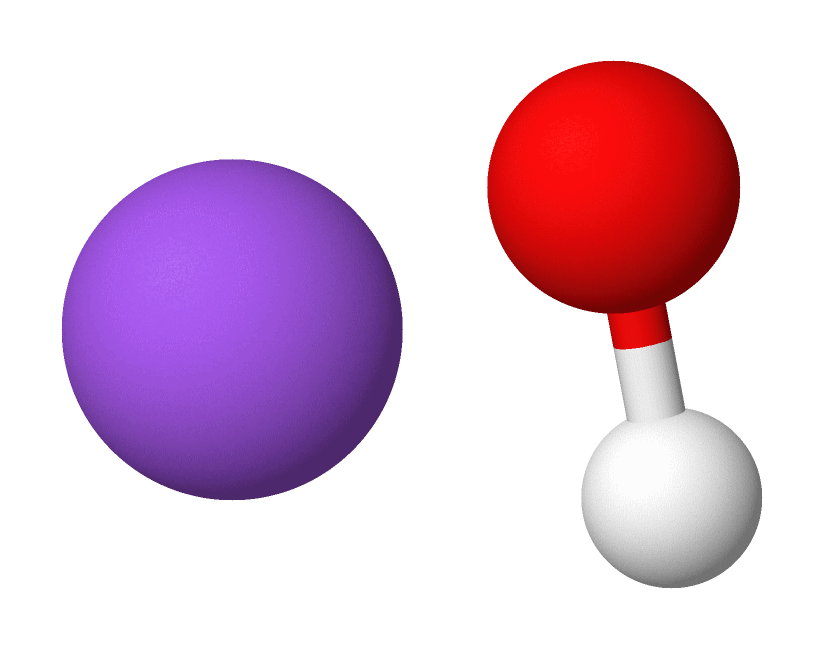
Physical Properties
Also known as: Caustic Soda Solution, Lye Solution, NaOH (aq)
Sodium hydroxide solution is the pre-diluted aqueous form of sodium hydroxide — typically supplied as a 10%, 25%, or 50% w/w solution for precise measurement of small quantities of strong alkali in developer formulation.[1] Since many developer formulas call for only fractions of a gram of NaOH, a dilute stock solution allows volumetric measurement with a graduated cylinder or syringe, which is more accurate than weighing small masses of the pellet form.
Photographic uses
See the primary sodium hydroxide page. The solution form is specifically useful for:
- Precise pH adjustment of developers: Adding 0.1–0.3 g of NaOH to a litre of developer is more reliable with a 10% solution (10 mL per gram of NaOH) than with a precision scale.
- POTA and similar high-energy developers: High-pH developers require careful NaOH control; dilute solution is the practical dispensing form.
- Darkroom safety: Dilute solution is meaningfully less hazardous to handle than pellet-form NaOH — the dissolution heat (the main acute risk of pellet dissolving) is already managed in the pre-mixed solution.
Practical notes
Supplied as clear colourless liquid. Very hygroscopic; once opened, absorbs atmospheric CO₂ and gradually converts to sodium carbonate (reducing alkali strength). Keep tightly sealed; replace periodically.
Concentrations: typical commercial grades are 10% (most useful for home darkrooms — the pellet form is much easier to dissolve to this concentration), 25% (intermediate), and 50% (the saturated or near-saturated form, specialty use only).
Related compounds
Sodium hydroxide — the primary page. Potassium hydroxide is the alternative strong-alkali compound.
References
- BOOK Modern Photographic Processing, Volume 2 1st ed. John Wiley & Sons, 1979. ISBN 0-471-04635-X. ↩
- WEB Sigma-Aldrich Safety Data Sheets Sigma-Aldrich. https://www.sigmaaldrich.com/US/en/search/safety-data-sheets ↩