The Principle of Compensating Development
Compensating development refers to any development technique where highlight density growth is restrained while shadow development continues. The result is a negative with compressed highlights and well-developed shadows -- a reduced contrast range that can handle high-contrast scenes.

How It Works
All compensating techniques rely on the same principle: local exhaustion of developing agents in high-density areas. In highlights, silver halide grains are densely packed and react vigorously with the developer.[1] When the developer is dilute or agitation is minimal, the developing agents in the thin layer adjacent to the highlight areas are consumed faster than they can be replenished. Development slows in highlights while continuing in shadows where demand is lower.
Methods of Achieving Compensation
1. High Dilution
Using a developer at extreme dilution (Rodinal 1:100+, HC-110 Dilution H or beyond)
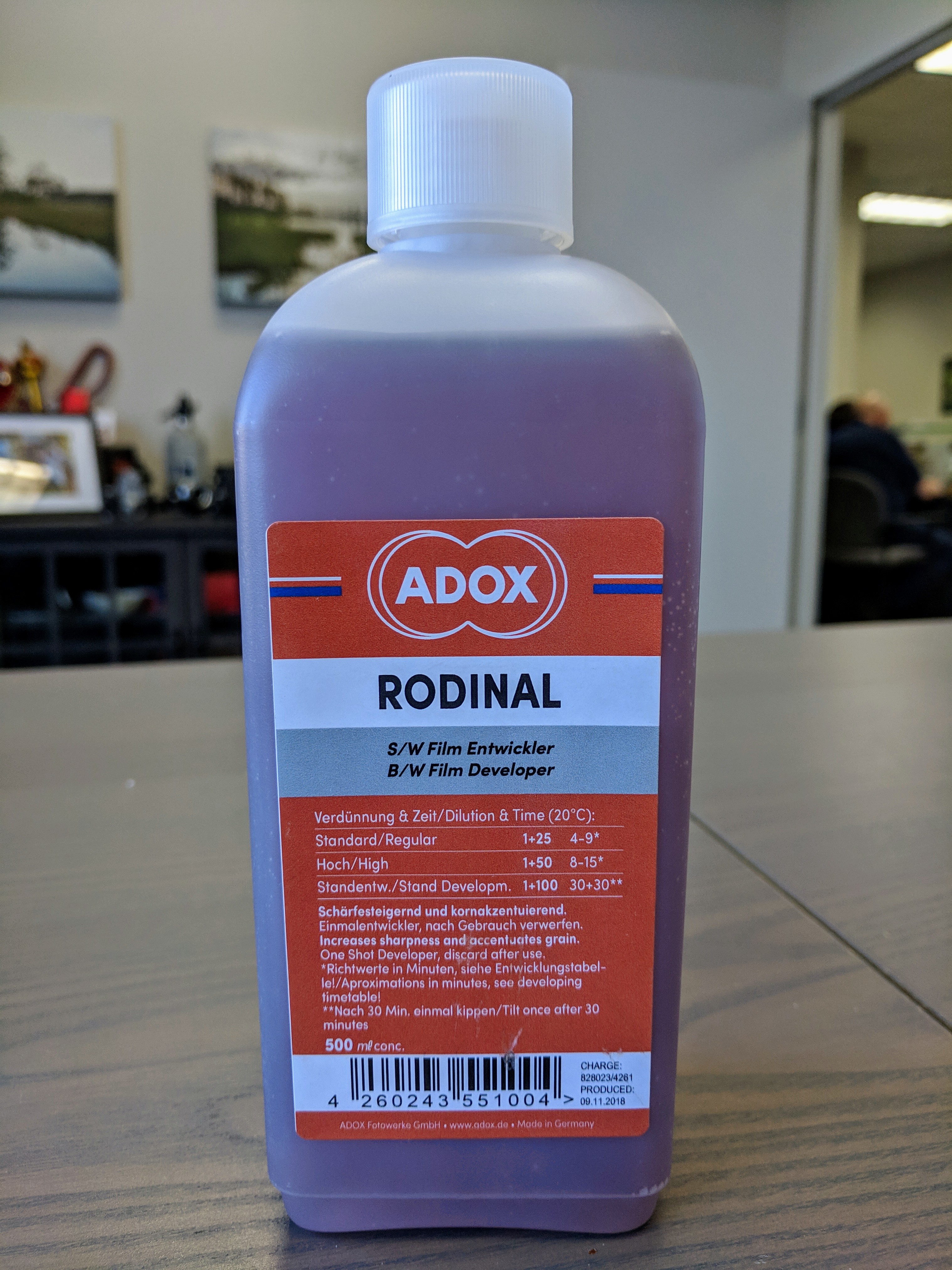
limits the total amount of developing agent available. Highlights exhaust the local supply first.
2. Minimal Agitation
Stand and semi-stand techniques prevent fresh developer from reaching exhausted areas. This is the most powerful compensating technique.
3. Two-Bath Development
The film absorbs a fixed amount of developing agent from Bath A (developer without alkali). In Bath B (alkali activator), the absorbed developer is activated and exhausts in proportion to the silver density. Highlights exhaust first because they consume developer faster. Diafine is the commercial embodiment of this approach.
4. Water Bath Development
Similar to two-bath, but using alternating immersions in developer and plain water. See the dedicated Water Bath Development technique article for details.
Choosing the Right Approach
- Moderate compensation: Use D-76 or XTOL at 1:3 dilution with reduced agitation
- Strong compensation: Rodinal 1:100 with semi-stand technique
- Maximum compensation: Stand development or two-bath development
Practical Applications
- Taming scenes with brightness ranges exceeding 7-8 stops
- Preserving highlight detail in backlit subjects
- Shooting in mixed lighting without filters
- Reducing the need for burning and dodging in the darkroom
Limitations
Compensating development is not magic. It cannot create shadow detail that was not captured by exposure. Always expose generously when planning to use compensating development -- the technique controls highlights, but shadows still depend on adequate exposure.
Tips
- Compensating development pairs beautifully with the Zone System: expose for Zone III shadows and let compensation bring highlights into range.
- Fine-grain developers like D-76 at high dilution offer both compensation and good grain characteristics.
- Test with your specific film: T-grain films (T-Max, Delta) respond differently to compensation than traditional-grain films (Tri-X, HP5+).