Acetic Acid
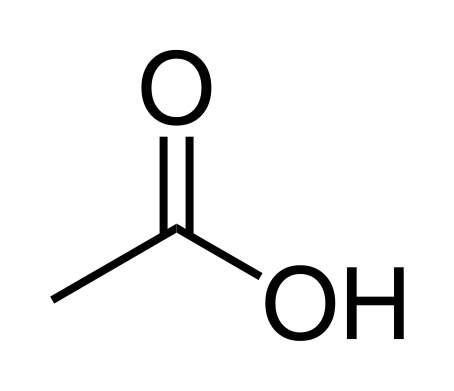
Physical Properties
- Molecular Weight: 60.05 g/mol
- Solubility (20°C): 1000 g/L
Also known as: Glacial Acetic Acid, Vinegar (dilute), Ethanoic Acid
Acetic acid (CH₃COOH; CAS 64-19-7), also known as glacial acetic acid in its pure form and as the active ingredient in culinary vinegar, is the traditional organic acid of the photographic darkroom. It functions as a pH-lowering stop bath, as the acid component of acid fixers, and occasionally as a rinse between development steps. Its sharp, unmistakable vinegar smell is one of the defining sensory experiences of a working darkroom — and the reason many contemporary workers substitute citric acid or sodium metabisulfite for some or all of acetic's roles.[1]
Photographic mechanism
Alkaline developers (typical working pH 9–11, driven by sodium carbonate or sodium hydroxide activators) rely on the ionization of phenolic developing agents like hydroquinone to reduce exposed silver halide. A stop bath exploits this pH dependence by sharply dropping the pH to roughly 4–5, which protonates the developing agents and essentially halts reduction activity within a second or two of immersion.[2] Acetic acid is ideal for this role: it is a weak organic acid (pKa ≈ 4.76) that buffers well at stop-bath pH, does not attack the silver image, and ionizes enough to neutralize adhering alkaline developer without the aggressive pH excursion a mineral acid would produce. In acid fixers it performs the same pH-holding function, keeping the thiosulfate in its fast-dissolving form while preventing carryover alkaline developer from raising the pH and destabilizing the fixer.
Common photographic uses
- Stop bath (traditional formula): A 1.5–2% solution of acetic acid (roughly 6 mL of 28% glacial dilution per litre of water) stops development in under a second. Most workers mix a bath for a single session and discard; reusable formulas with indicator dyes (see below) track exhaustion visibly.[3]
- Acid fixer buffering: Traditional sodium thiosulfate acid fixers use a small amount of acetic acid (~1%) plus a sulfite preservative to hold working pH around 4.5 — the range where thiosulfate dissolves silver halide quickly without decomposing.
- Indicator stop bath: A dilute acetic acid solution with a small amount of bromocresol purple dye shifts from yellow (active, pH < 5) to purple (exhausted, pH > 5.5) as it neutralizes carryover developer. Visible exhaustion change is the main advantage over a plain citric acid stop bath.
- Wet-plate collodion developer acidifier: Acetic acid is the acid in the standard 4% ferrous sulfate + 1% acetic acid wet-plate developer.
- Clearing bath for some alt processes: Dilute acetic acid rinses clear residual iron staining in Van Dyke brown and related processes, similar to the clearing role citric acid plays for cyanotype.
Practical notes
Acetic acid is sold in three main photographic-relevant concentrations:
- Glacial acetic acid (99.7%+) — the pure compound. Solidifies at 16.6 °C (the "glacial" name comes from ice-like crystals that form in cold weather). Sharp, throat-catching smell even in small quantities. This is the form most darkroom suppliers stock, and it requires dilution before use.
- 28% dilution (sometimes labeled "photographic" or "technical") — a convenient stop in between glacial and working strength. Traditional Kodak "indicator stop bath concentrate" is in this range.
- 5–7% household white vinegar — the kitchen form. Fine for emergency stop baths at the right dilution; slightly more expensive per unit of acetic acid than buying glacial; no sharper-smell penalty since working dilutions produce the same vapor.
Dilution rule: always add acid to water, never the reverse. Acetic acid mixing is mildly exothermic and splashing cold water into glacial can boil it back out at the surface. Work under ventilation; the vapor is not dangerous at working strength but is eye-watering from the concentrate.
Stock solutions keep indefinitely in glass. Plastic containers work for dilutions ≤10% but glacial slowly attacks most plastics and should stay in glass for storage. Label the container clearly — undiluted glacial acetic acid is genuinely dangerous and should never be mistaken for a working dilution.
Disposal
Dilute acetic acid solutions (≤5%) and spent stop baths without heavy metal contamination are safe to pour to drain with plenty of water — acetic acid is rapidly biodegraded in municipal wastewater. Used stop baths containing developer residue carry the developer's environmental profile; dispose of those according to the developer's rules, not the acetic acid.
Related compounds
Citric acid is the most common substitute for acetic in stop baths — food-grade, odorless, buffered similarly. Tartaric acid plays the same role in iron/gold toner formulas. Sodium metabisulfite gives an odorless, slightly acidic stop-bath alternative that also preserves the solution chemically. Most modern workers use citric or metabisulfite as their default and reserve acetic acid for recipes that specifically call for it (indicator stop bath, collodion developer).
Alternatives
Photographers with asthma, sensitive respiratory conditions, or a strong dislike of the vinegar smell have two ergonomically superior alternatives that cover essentially all of acetic acid's roles:
- Citric acid stop bath — odorless, food-grade, buffered similarly. The standard modern alternative.
- Sodium metabisulfite — adds sulfite-based preservation on top of the stop action; useful if the same chemical serves multiple roles in the workflow. Carries its own SO₂ release risk for asthmatics; citric is safer.
Acetic acid remains the canonical choice only where a specific recipe calls for it (indicator stop bath dye chemistry, collodion developer pH) or where the sharp smell is actively desired as a workspace cue.
References
- BOOK The Darkroom Cookbook 4th ed. Focal Press, 2016. ISBN 9781138959170. ↩
- BOOK Modern Photographic Processing, Volume 2 1st ed. John Wiley & Sons, 1979. ISBN 0-471-04635-X. ↩
- BOOK The Film Developing Cookbook 2nd ed. Routledge, 2019. ISBN 9781138959187. ↩
- WEB Sigma-Aldrich Safety Data Sheets Sigma-Aldrich. https://www.sigmaaldrich.com/US/en/search/safety-data-sheets ↩